August 2023
One issue critical to addressing societal challenges and economic drivers is child care. In order for parents to work or go to school and maintain economic stability for their families, child care is essential. Child care enables families, workplaces, and the economy to thrive while providing children with the support needed for their growth and learning.
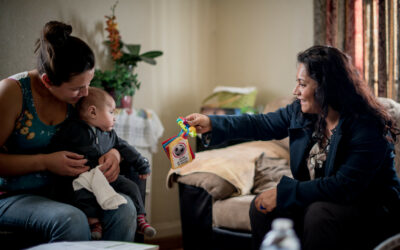
A key component of California’s child care landscape is Home-Based Child Care (HBCC), which is child care offered in a provider’s home or the child’s home. In addition to being the most common form of nonparental child care for infants and toddlers, HBCC is also used the most by historically marginalized families. These include families with infants and toddlers, low-income families with parents working non-traditional hours, immigrant families, those living in rural communities, families
of color or families with children who have disabilities or special needs. HBCC is often classified into two broad categories. Family Child Care, or FCC, refers to providers who are paid to care for children out of their own homes. FCC providers are often regulated and licensed by the state. In the state of California, FCCs are licensed through the Department of Social Services (CDSS). In contrast, Family, Friend, and Neighbor (FFN) care commonly refers to providers who offer care in an informal home setting and are unregulated or license-exempt; these providers can be paid or unpaid.
The importance of both types of home-based child care cannot be understated. As noted above, HBCC is utilized primarily by marginalized families who are most likely to encounter inequitable access to services and discrimination within systems. Additionally, in California roughly 80% of young children ages birth to 2 and 40% of children ages birth to 5 are cared for by informal caregivers. And because so many families rely on home-based child care, any initiative seeking to ensure equity in child care must address the needs of HBCC providers. However, very little is known about this population of providers.
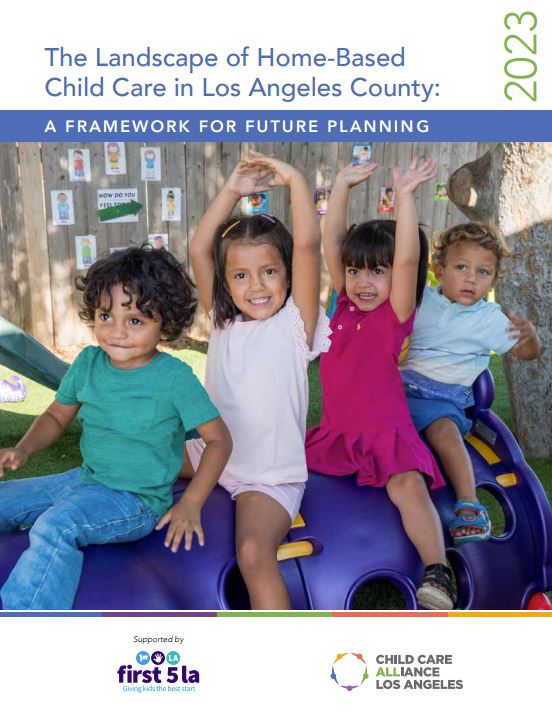
This report, The Landscape of Home-Based Child Care in Los Angeles County: A Framework for Future Planning, is intended to fill this significant gap in knowledge. Featuring data and insights collected from both HBCC providers and the families who rely on them, this report serves as a valuable resource for policymakers, funders and other stakeholders seeking to develop innovative strategies that support the HBCC workforce and improve child care outcomes.