By, Ruel Nolledo | Freelance Writer
February 26, 2026
“Movies may affect people’s lives. But they don’t have the long-lasting, profound effect of a home-visit program.”
Rob Reiner (LA Times, 2002)
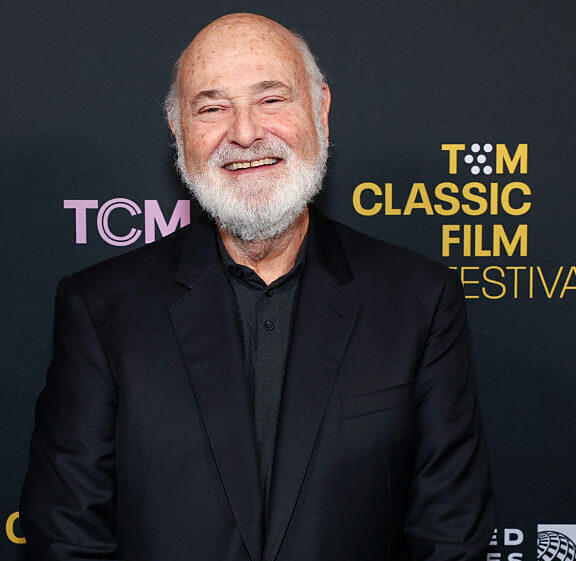
Rob Reiner was an early childhood advocate as much as he was a filmmaker.
In 1994, years before Proposition 10, he reached out to former First Lady Tipper Gore to seek her advice on how best to promote protections for children and mental health issues. That led to Reiner hosting a small gathering — a mix of celebrities, philanthropists and children’s experts — at his home in 1995. The goal was simple: foster an exchange of ideas and contact information, with the goal of leveraging Hollywood power to raise awareness on the importance of a child’s first years of life.
For the next two years, Reiner put filmmaking on hold while he worked on “I Am Your Child,” a national public education campaign that fundamentally changed how America viewed early childhood development. Launched in 1997, the campaign was anchored by a prime-time television special and supported by partnerships with pediatricians, researchers and advocacy groups. “I Am Your Child” translated emerging brain science in a way that parents and policymakers alike could understand.
That same year, Reiner worked with President Bill Clinton to hold a White House Conference on Early Childhood Development and Learning, bringing the issue to a national policy stage. The event would be successful as part of a broader push that resulted in increased funding for children’s research, Head Start and QIC Supplemental Nutrition Program. But it failed to win congressional support for an “Early Head Start” program to be funded by a tobacco tax.
That’s when Reiner turned his attention to the states. He encouraged the National Governors Conference to put together a task force on early childhood development. It was following a speech he delivered at the National Governors Association that Reiner was approached by former Assemblymember Mike Roos, who suggested they work together on something that focused on California: a ballot measure that created a source of funding dedicated to meeting the needs of young children.
***
Reiner’s work in championing Proposition 10 cannot be understated. According to a First 5 California report, Proposition 10 has generated more than $12 billion in funding exclusively for young children and their families. During that time, an estimated 30 million young children and their families have received direct services supported by First 5 investments.
Beyond securing funding for services and programs, Reiner also created an opportunity for early childhood advocates to create long-lasting changes to the systems that affected young children and their families: government branches at every level, health care providers, school systems and more. Several First 5 commissions have leveraged Proposition 10 funds to create connections and networks, as well as educate policymakers and the general public about critical issues affecting not just young children but their families and communities. As a result, there’s greater awareness of and support for initiatives around issues like early identification and intervention, trauma-informed care and transitional kindergarten — all of which would likely not have been possible without the support of Proposition 10 funds.
Reiner’s passion for improving young children’s lives inspired change in other states as well. Four years after California passed Proposition 10, Florida voters approved a constitutional amendment that required the state to provide free prekindergarten to 4-year-olds. And in 2006, Arizona voters passed First Things First, which established an early childhood development and health fund via a tobacco tax similar to Proposition 10.
The “I Am Your Child” campaign also created long-lasting change. Ohio, for example, leveraged the campaign to jumpstart its Help Me Grow program in 1997. His advocacy also eventually paved the way to new investments in national programs such as Early Head Start.
While Reiner will always be remembered for his contributions as a filmmaker, it’s his work as an early childhood advocate that will leave the most enduring mark of all. Through his passion and commitment, a generation of children in California has grown up with the opportunity to learn, thrive and grow.
“This is the greatest thrill of my life,” Reiner said of his work as an early childhood advocate during a 1997 interview with Charlie Rose. “I hate to say it, but if I could make a living doing this, I wouldn’t make films.”
###