By, Ruel Nolledo | Freelance Writer
March 2, 2026
“Perhaps you are thinking, how does this affect me? What can I do about these things? And I say to you that, every day you live, you make some impact on the world and you can choose what sort of impact you make.” — Jane Goodall
Sustainability is more than just the environment. Experts define it as the delicate balance and blend between three essential elements: environmental health, social equity and economic vitality. When properly integrated, these elements foster healthy, thriving and resilient communities for our children.
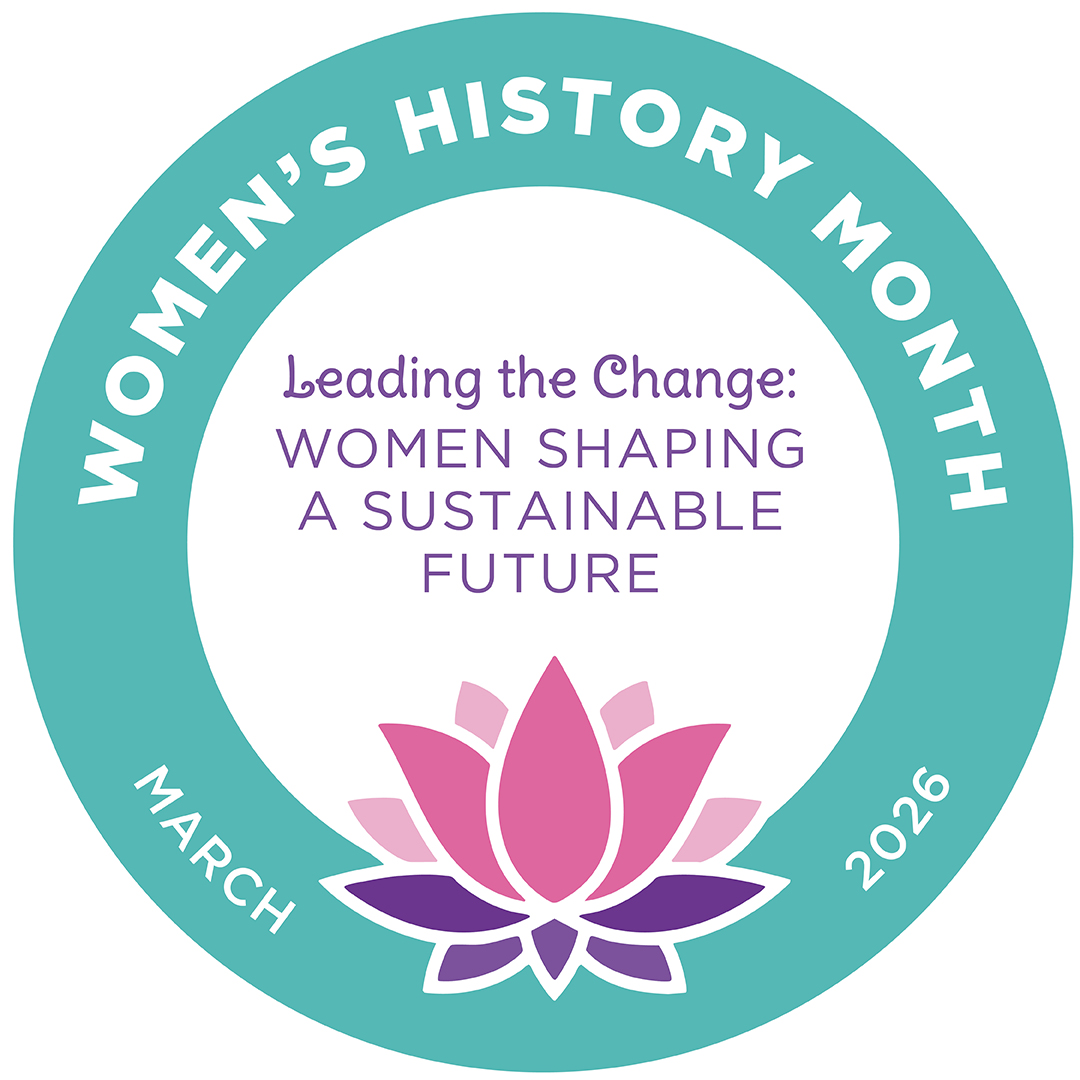
The importance of sustainability is front and center this March as we step into Women’s History Month (WHM), a monthlong celebration of the many contributions women have made throughout history, many of which still affect society and our lives today. The enduring effects of their work are at the heart of this year’s theme, “Leading the Change: Women Shaping a Sustainable Future.”
In selecting the theme, the National Women’s History Alliance emphasized the important role that women have played — and continue to play — in creating sustainability where it matters. Not just the environment, but finance and economics, community resilience, leadership succession and intergenerational equity.
“Whether developing green technologies, advancing economic justice, strengthening education systems, or building civic power,” they explain, “Women are designing blueprints for sustainable transformation.”
Nowhere is this more evident than in Los Angeles, whose history is rife with blueprints left behind by women who surveyed the terrain and forged a path forward that others could follow.
Harriet Williams Russell Strong (1844-1926) understood that Los Angeles was nothing without water. She invented innovative systems of water storage and flood control and advocated in Congress for the adoption of water conservation practices in California. Her work helped lay the foundation for sustainable water policy in the arid land that would grow into the Los Angeles metropolis.
Biddy Mason (1818-1891) believed in economic empowerment. After winning her freedom in a California court, she went on to become a successful entrepreneur and one of the first Black women to own property in Los Angeles. She used her resources to empower others: founding one of the first Black churches in Los Angeles, establishing a traveler’s aid center, and supporting her community during floods and hard times. Today, Mason’s approach to entrepreneurship and economic empowerment is recognized as an enduring blueprint for financial resilience.
Maria Guadalupe Evangelina de Lopez (1881-1977) knew the value of civic power. A teacher and translator, she became president of the College Equal Suffrage League of Southern California in 1911, a time when Californians were debating about Proposition 4, which would grant women full voting rights. Her work in translating suffrage materials into Spanish helped the women’s movement reach Latino women throughout California. On Oct. 3, 1911, she made history by becoming the first woman in California to deliver a speech on suffrage in Spanish. Her work played a major role in women finally winning the right to vote in California — a victory that led the way for other campaigns in other states.
Their accomplishments aren’t just artifacts of the past — they were blueprints for envisioning a better future. And knowing this is crucial, explains NWHA, because it offers guidance for us as we lay out our own blueprints for the future ahead:
In a culture dominated by short-term thinking, historical memory restores perspective. It reminds us that land cannot endlessly give without replenishment, that mass production carries hidden costs, and that communities fracture when economics are severed from ethics. Women’s history offers a vital lens because it is rooted in long-view thinking.
This month, First 5 LA is honored to join Los Angeles in celebrating all the women who continue to forge a brighter, more sustainable future for all.
Happy Women’s History Month!