By, Ruel Nolledo | Freelance Writer
May 28, 2026
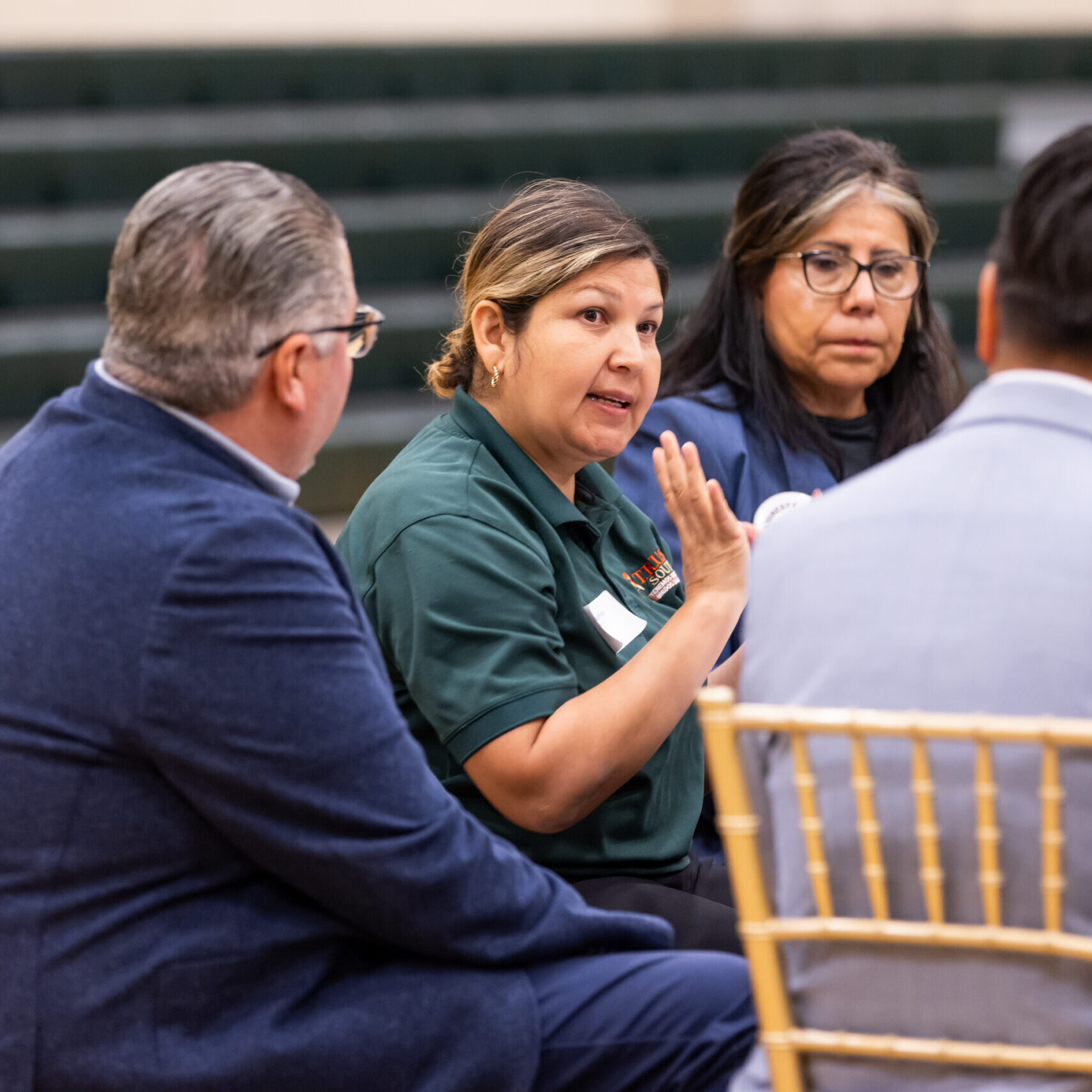
The conversation at the table turned to how families were coping.
“I think folks could navigate a little bit better before,” reflected one participant. “But now the fear is palpable. Folks are afraid to enroll their children in child care, afraid to send them to school, afraid to bring them to the doctor for their appointments.”
 Brandon Nichols, director of the Los Angeles County Department of Children and Family Services and a First 5 LA commissioner, nods in understanding. “There are resources and programs that are out there, but people are afraid to use them, because using them could expose them to danger.”
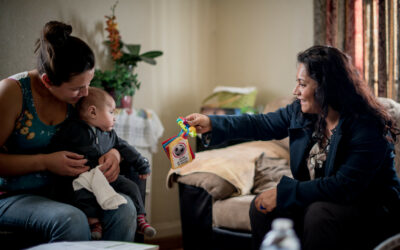
One by one, others at the table recount what they have been seeing: families pulling back from home visiting services, parents afraid to leave home for work, worries about handing over personal information and fears that ICE is operating in their neighborhoods.
“You can’t just look at one of these areas or challenges alone,” said one person. “These are multiple layers of challenges or disadvantages that communities are facing.”
***
Those concerns echoed across the other conversations taking place at St. Sophia Conference Center that day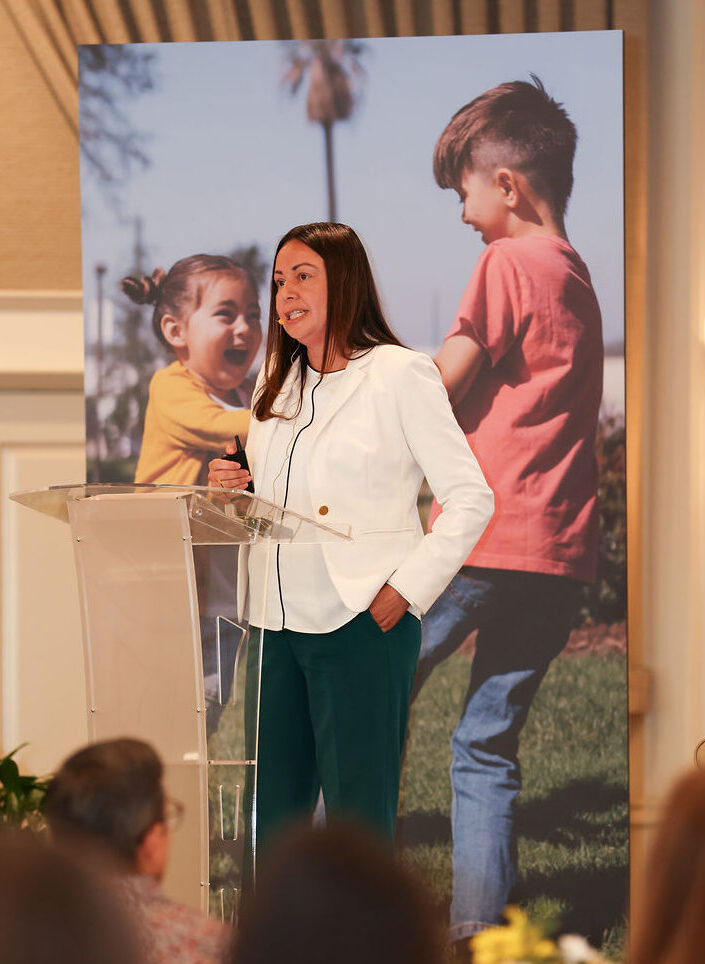 in April, where more than 175 participants had gathered for First 5 LA’s Vision to Action Summit. The all-day event was convened as a means of fostering solution-driven discussions and strengthening partnerships, all toward improving the futures of young children.
“There are half a million children in Los Angeles County under the age of five,” said First 5 LA President and CEO Karla Pleitéz Howell. “That’s half a million possibilities. Half a million futures. And that is why we are here.”
The summit was developed as an opportunity for participants to share what was working and to build on the momentum of their efforts. At the same time, said JR Nino, First 5 LA’s vice president of Operations & Sustainability, it was an opportunity for attendees to take a step back and look at the big picture, with new data and fresh perspectives.
“This summit is about what becomes possible when data informs our decisions,” said Nino. “When community voice shapes our strategies, and when cross-sector partnerships drive listening and systemic change.”
A series of federal actions has created a shifting landscape, affecting families with young children on several fronts. Heightened immigration enforcement has produced a climate of fear in immigrant and mixed-status households across the county, regardless of any one family’s status. Parents are pulling back from child care enrollment, school drop-offs, doctor’s appointments and home visiting services, concerned that sharing personal information could put them at risk.
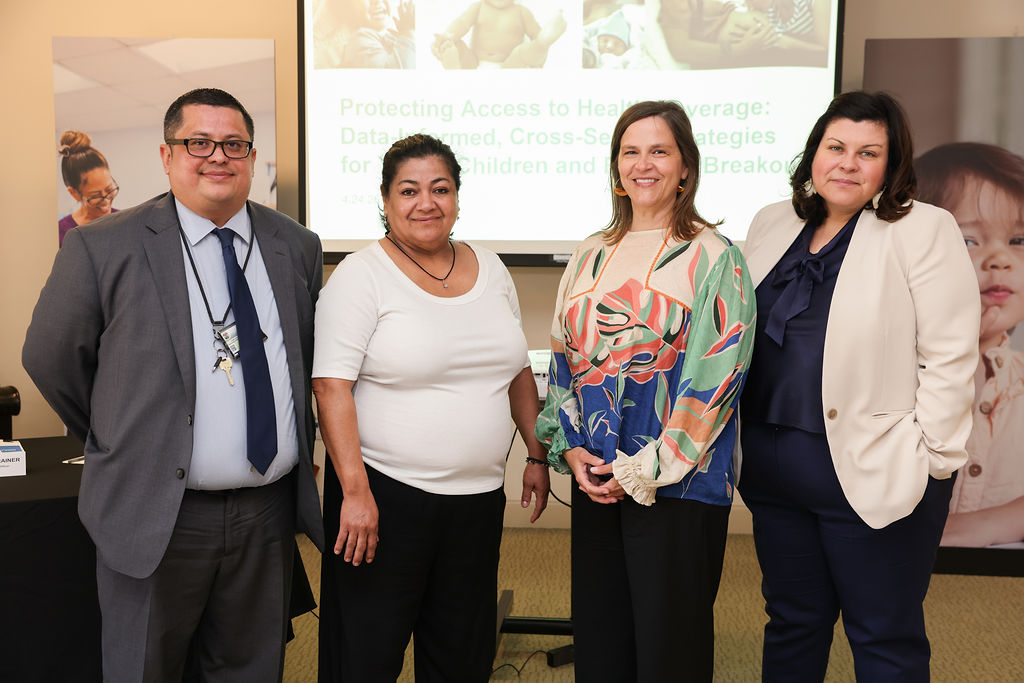 Federal policy changes are also destabilizing the safety net many families rely on. Medi-Cal, the primary source of health coverage for 77 percent of children prenatal to age 4 in the county, remains available to children regardless of immigration status, even as California has restricted Medi-Cal coverage for immigrant adults. Tara Ficek, director of First 5 LA’s health systems, said these shifts will bring disruption and confusion for many families with young children. Enrollment among children has already dropped, according to recent figures compiled by Georgetown’s Center for Children and Families.
“There’s a ripple effect,” said Ficek. “Any change in coverage for one group impacts other groups.” She added that families need to know children’s health coverage is still available.
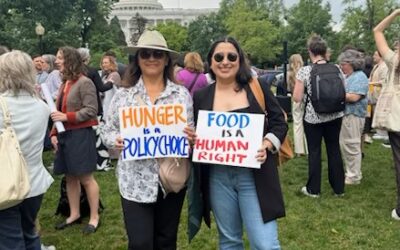
Federal reductions to the Supplemental Nutrition Assistance Program (SNAP), known in California as CalFresh, are expected to compound food insecurity. In her address, Pleitéz Howell told attendees that nearly one in three families with children already struggle to put food on the table. Federal cuts put as many as 3.1 million families at risk of losing some or all of their food benefits.
In response to these challenges, summit attendees dove headfirst into discussions that focused on what could be done to limit the harm and keep families connected to the resources they need. Several ideas surfaced again and again across the day’s sessions.
Lean into innovation. Even before the current cuts and restrictions, families struggled to enroll and stay enrolled in programs because of confusing eligibility rules and requirements. That problem will only grow, said Anish Mahajan, chief deputy director of the Los Angeles County Department of Public Health, as new federal policies make it harder for many to stay on Medi-Cal and SNAP.
“That’s where the innovation has to be,” Mahajan said during the plenary. “There are definitely actions we can all take together to help people stay on Medi-Cal or help them continue their SNAP benefits. We need innovation in the intermediate term, so we can help our communities maintain their eligibility where they can.”‘
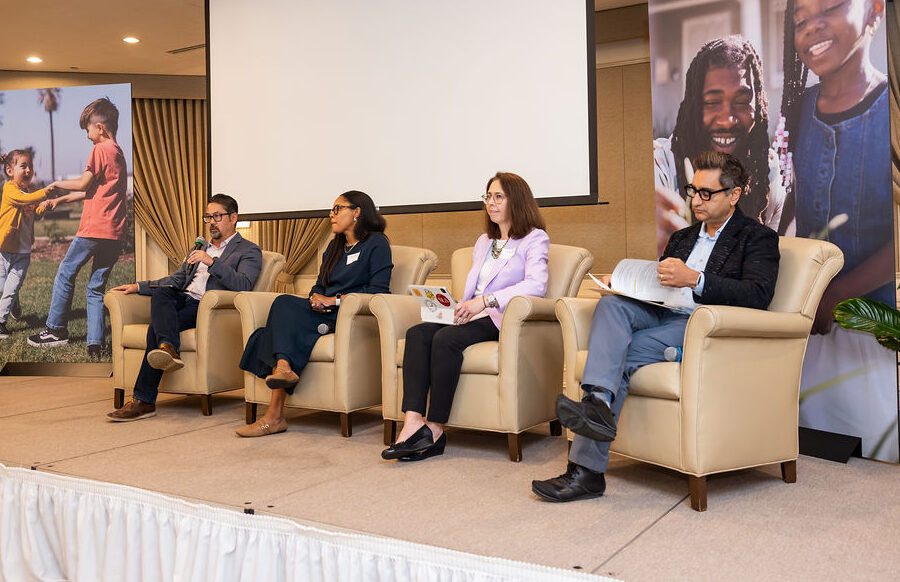
Innovation also means adopting new perspectives that will result in initiatives and investments that have a more substantial impact on young children and their families. Case in point: the issue of housing, which is often viewed as a crisis response. But First 5 LA’s 2024-2029 Strategic Plan and Prevention First Initiative have reframed housing as a prevention priority that addresses a root cause of how young children develop, not just a condition to address only after a family has lost their home.
“Housing is central to early childhood because a stable home is where healthy development begins,” said First 5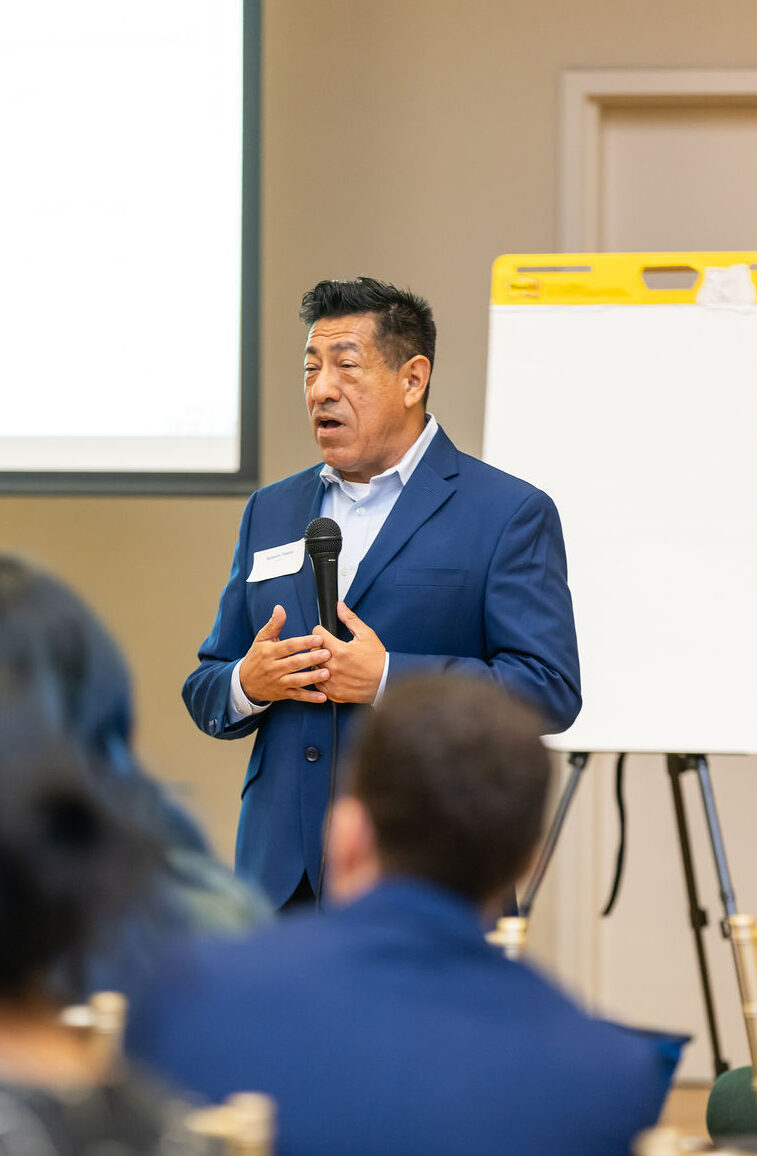 LA Program Officer Roberto Roque. “This work requires partnership, and the summit created space to align data, lived experience, and cross-sector leadership to advance prevention-focused solutions for families before they reach crisis.”
Pleitéz Howell noted that it was crucial to remain agile and resourceful to ensure all children in L.A. County received the support and resources they needed.
“If we move with innovation,” she said, “we stay grounded in equity.”
Change the narrative. Several speakers noted that cuts to programs such as Temporary Assistance for Needy Families (TANF) and SNAP are being justified by claims of fraud and abuse. But just as onerous, said Amy Matsui, vice president for child care and income security at the National Women’s Law Center, is the effect that narrative has on families themselves.
“Our families are starting to believe it,” she said during the plenary session. “That there are these ‘other people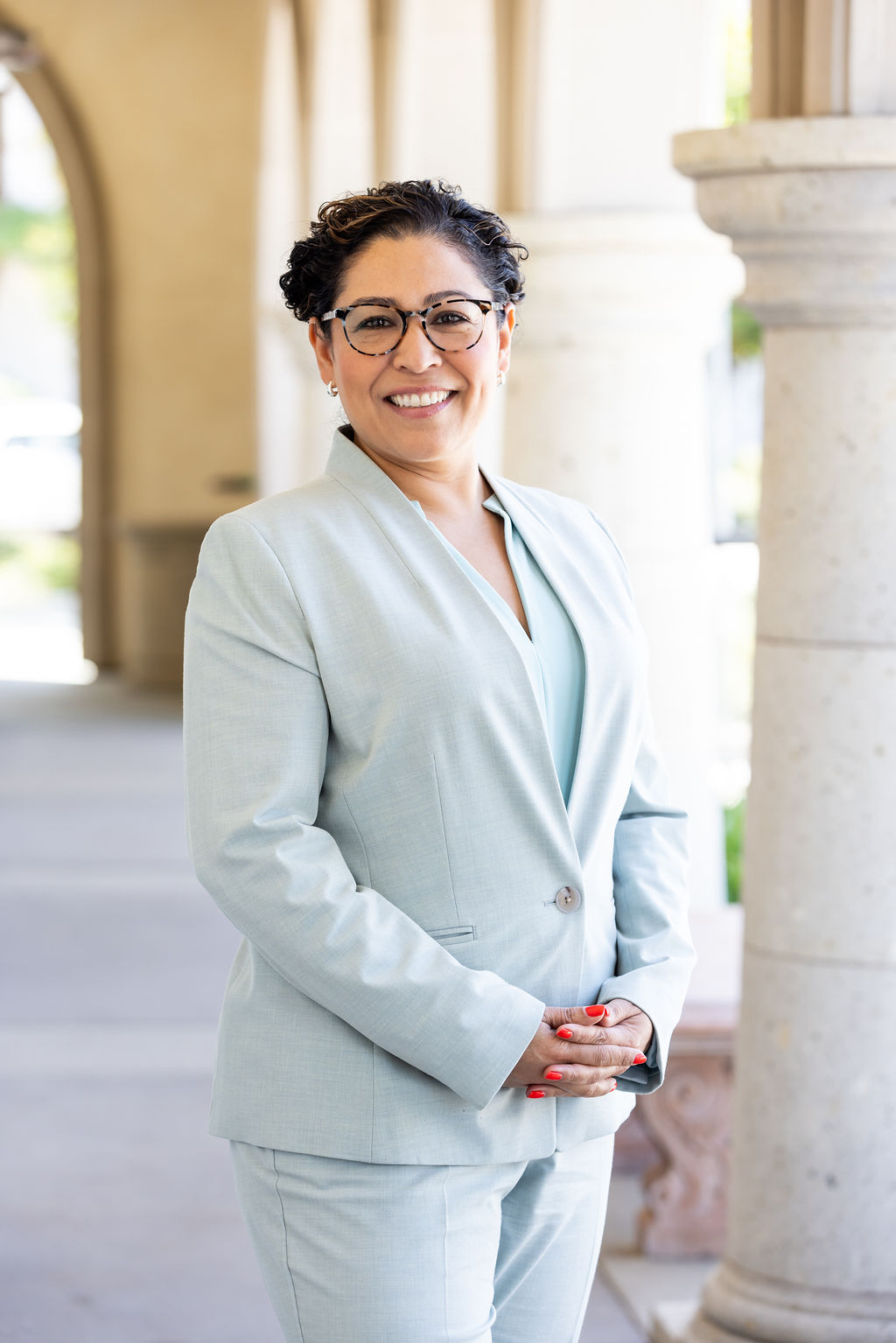 who are the fraudulent ones, and that’s why I can’t have my benefit.’ That is what will keep us from going further together, doing the things that we need to do in our communities to keep people safe.”
Just as important is making sure families hear stories of progress and possibility. In her keynote address at the luncheon, Karla Estrada, deputy superintendent of instruction at the Los Angeles Unified School District (LAUSD), shared her own personal journey and the people who helped her along the way.
“Many of you in this room have similar stories,” she said. “We serve as examples of what’s possible. So let’s share our journey, share those examples. That greatness can come from LA.”
Work together. More than one speaker at the summit called out the urgent need for stakeholders and organizations to coordinate efforts to ensure that young children and their families receive the care, support and resources they need.
“We have to figure out how to work together, all of us in the same direction, in a unified, strategic way,” said plenary host John Kim, president and CEO of Catalyst California. He added that nonprofits were often forced to compete against each other in a bid for scarce resources. “It’s all the more important for all of us to step in now and work collectively, do what we can to mitigate the harm and push us towards that next horizon.”
Estrada drove home that point later in the day, emphasizing that responding to young children’s needs in the current climate meant seeing each other’s work as additive and complementary, contributing to a greater whole.
“Being agile and adaptive,” she said, “means that we recognize each and every one of us as organizations and as partners have talents, have skills, resources that we can leverage to fill those needs and really be a central resource for our families and students.”
Be bold. Innovation and new narratives do not take hold on their own, speakers said; they require meeting the moment head-on. Toward the end of the plenary, Kim urged attendees not to retreat in hopes of avoiding the worst of the restrictions.
“We should step up,” Kim said. “Step into this moment and actually use this moment to turn the tide, to push and return. We’ve done it before in this country.”
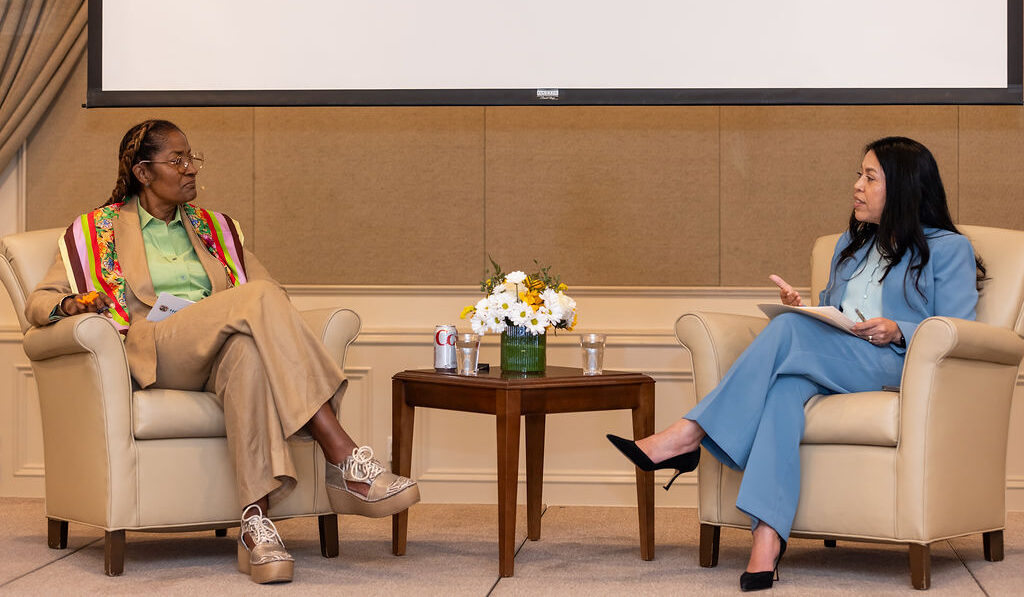
That spirit of boldness carried into the summit’s closing fireside chat between Aurea Montes-Rodriguez, First 5 LA’s vice president of community engagement and policy, and Los Angeles County Supervisor Holly Mitchell, who chairs the First 5 LA Commission. No fireplace was in sight, as Mitchell noted, but the conversation sparked several candid exchanges about the realities working families with young children face and — just as important — what was needed in the current climate.
“How big is your brave?” Mitchell asked. “Are you willing to push the envelope in terms of your own comfort level of courage or bravery, to go above and beyond, to do what times like these require from all of us?
“Our youngest constituency, those of us across LA County who are zero to five, are counting on us to have pretty big braves to guarantee their future.”
###